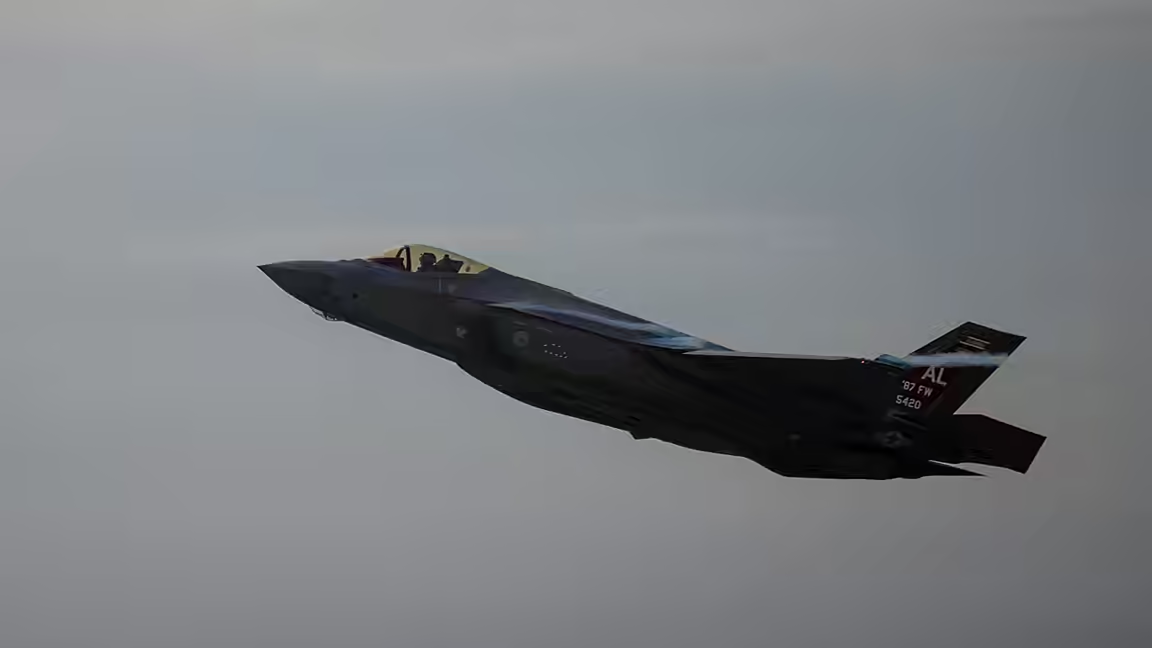
The Pentagon's F-35 Joint Program Office is trying to retrieve unserviceable fighter-jet components that were unexpectedly rerouted from Australia to Hong Kong while bound for repair in the United States. The office confirmed the shipping issue on September 24 and said it was working with US authorities and industry partners to recover the cargo, investigate the incident and prevent a recurrence.
The reason for the diversion and the present custody of the shipment were not publicly established. Those unanswered questions have prompted inquiries on Capitol Hill because Hong Kong is under Chinese sovereignty and the F-35 incorporates tightly controlled technology. Congressional staff on national-security committees have received briefings, with further updates expected as officials determine how the components left their intended logistics route.
Reports about the shipment say it included a cockpit canopy. The transparent structure is more than a cover for the pilot: it uses a radar-absorbing coating that contributes to the aircraft's low-observable design. A worn or unserviceable part may still carry information of interest to a foreign military, although the public evidence does not establish that Chinese authorities obtained or examined the cargo. The Pentagon has not detailed the complete contents or assessed publicly whether any sensitive technology was exposed.
Lockheed Martin, the F-35's manufacturer, said its teams use safeguards intended to protect shipments and the program's international partners. The company manages a large portion of the program's supply chain and relies on commercial carriers to move parts. Australia operates F-35 maintenance facilities, but the reported repair route reflected the fact that not every depot can service every component.
The incident also draws attention to the unusual scale and structure of F-35 logistics. The United States and partner nations use a global pool of spares rather than keeping every item assigned permanently to one country or aircraft. That arrangement supports fleets spread across multiple continents, but it also requires accurate custody records across contractors, carriers, military offices and repair sites.
Past government oversight has identified weaknesses in that system. A 2023 Government Accountability Office review found that the F-35 program did not enter more than one million contractor-managed spare parts into an accountable government property system capable of recording changes in real time. That finding does not explain the Hong Kong diversion, but it provides context for lawmakers' concern about visibility over the program's inventory.
For now, the confirmed facts remain narrower than the security fears surrounding them: a shipment of unusable components did not reach its planned US destination, the program office is seeking its return, and an investigation is under way. Establishing the carrier's route, current possession of the parts and any access to them will be necessary before officials can determine whether the mishap was solely logistical or also created a national-security exposure.