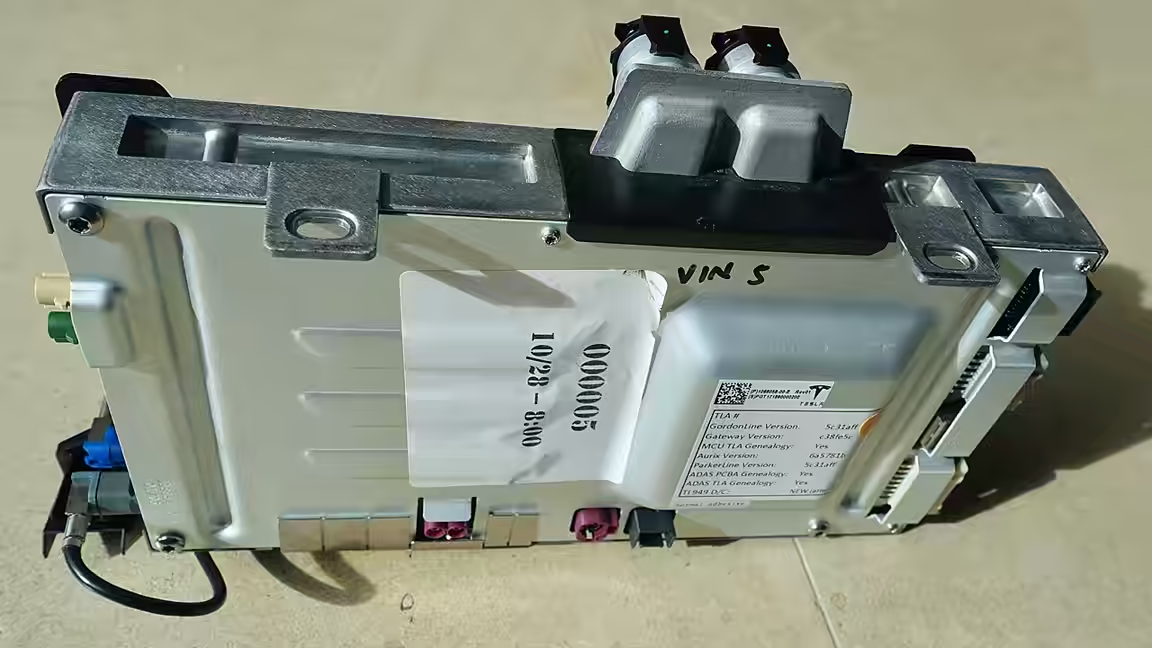
Cloud infrastructure provider Namespace has described an unusual expansion of its macOS fleet: hundreds of MacBook Pro laptops installed in custom data-centre racks. The company says it adopted the design because customers building and testing iOS software need current Apple hardware, while large orders for Mac minis faced long delivery times.
Namespace's account says an order for several hundred Mac minis placed in January did not arrive until July. The company also wanted newer processors for customers, but Apple's staggered hardware updates meant the desktop models it preferred were not always available with the latest chips. Those constraints led engineers to package laptops as servers despite paying for screens, keyboards and batteries that have little value in a rack.
The physical installation is more complicated than a conventional server shelf. Each laptop receives an IP-based keyboard-video-mouse connection for maintenance, an external 10-gigabit Ethernet adapter and power. Namespace counted four cables per laptop, plus network and KVM wiring across each shelf. It developed holders intended to move heat away from hot spots and had to source flexible HDMI cables after finding that rigid ones could disconnect during maintenance.
Operating laptops without direct physical access created software problems too. Namespace says FileVault's unlock prompt can disappear from an external display after five minutes following an unexpected restart. Remote unlocking over SSH introduced the same timing issue on laptops, sometimes forcing an operator to restart a machine physically and complete the unlock quickly. The company also reported occasions when an external USB network adapter stopped linking until its macOS network service was deleted and recreated.
Customer instances run as virtual machines built on Apple's Virtualization framework. Namespace says this lets its platform offer common features such as cache volumes, telemetry and virtual private-cloud connections across macOS, Linux and Windows. The company prepares and distributes large virtual-machine images so new macOS and Xcode versions can be made available shortly after Apple releases them.
The laptop racks are not presented as the permanent ideal. Namespace says M5 and M6 Mac minis and Mac Studios are entering its fleet, bringing built-in 10-gigabit networking, automatic startup after power loss and configuration through mobile-device management. Custom shelves remain part of that plan, but the desktop machines eliminate many laptop-specific cables and recovery problems.
The project illustrates the practical limits surrounding cloud macOS capacity. Apple's software and app-distribution requirements keep genuine Mac hardware central to iOS development, while hardware availability, remote management and cooling determine how quickly providers can turn that equipment into reliable shared infrastructure.