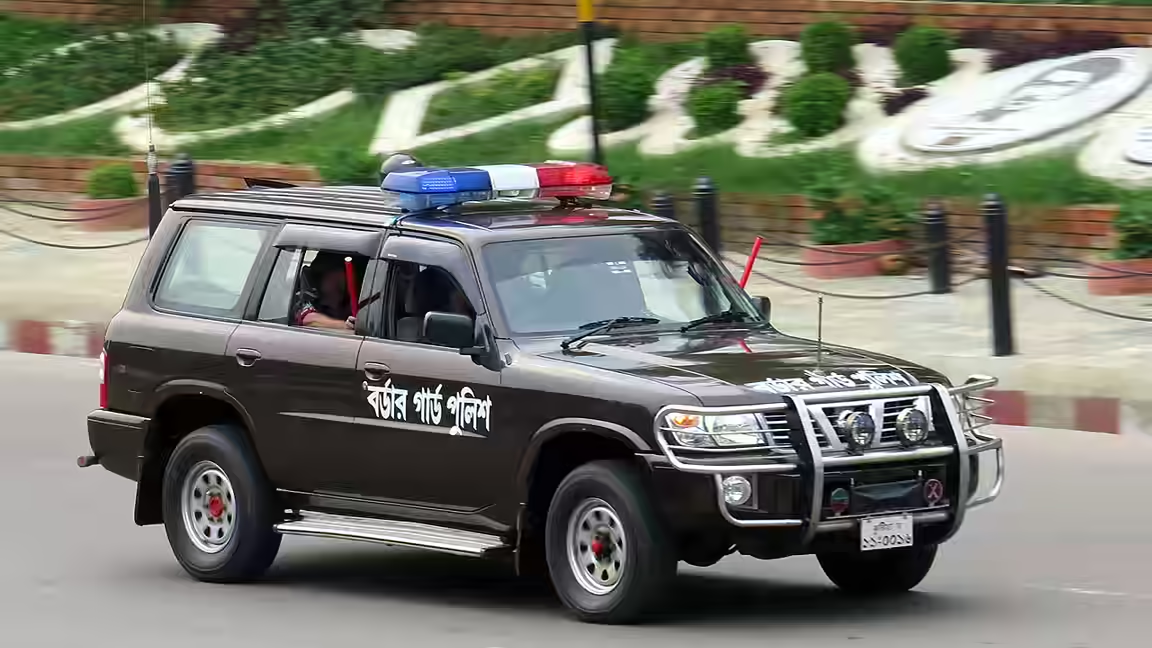
Border Guard Bangladesh deployed 108 platoons across Dhaka and seven other districts on November 25, according to a statement from the paramilitary force reported by The Daily Star. The operation was described as a measure to maintain public order and prevent incidents, with four additional platoons kept ready for use if required.
The deployment covers Dhaka, Narayanganj, Gazipur, Mymensingh, Gopalganj, Faridpur, Chattogram and Cox’s Bazar. The largest concentration is in Gopalganj, where 56 platoons were assigned. Savar and Ashulia received 18 platoons, as did Gazipur. Six platoons were sent to Narayanganj, two to Bhaluka in Mymensingh, three to Chattogram and one to Cox’s Bazar. The statement did not provide a district-by-district figure for every remaining location in the wider deployment.
Border Guard personnel are working with district administrations and other law-enforcement bodies under instructions from the Ministry of Home Affairs. The force said it had increased monitoring at important facilities, industrial areas and other locations regarded as sensitive. Headquarters is overseeing the operation continuously, using drones, body-worn cameras and other equipment, according to the statement.
The distribution places particular emphasis on Gopalganj and on the industrial belt around Savar, Ashulia and Gazipur. Those allocations account for most of the announced force. The public statement, however, did not identify a specific threat or incident that prompted the operation. It framed the deployment in preventive terms and said the objective was to support order and avert unwanted events.
The four standby platoons provide a reserve beyond the 108 units already assigned. Their inclusion means the force can reinforce an area without immediately moving units from another district. Coordination with civilian administrators and police agencies also places the border force within a broader domestic security operation rather than an independent deployment.
The announcement offers operational numbers and monitoring methods but limited context about the expected duration. It does not say how long personnel will remain at the listed locations or establish a timetable for drawing them down. For now, the verifiable scope is the force’s November 25 account: 108 deployed platoons, four held in reserve, coverage across eight districts, and heightened surveillance at installations and industrial zones.
The statement also distinguishes deployed personnel from the four-platoon reserve, avoiding a combined figure that would overstate the number already in the field. Its breakdown names Savar and Ashulia together and specifies Bhaluka within Mymensingh, giving more detail than district totals alone. The listed monitoring tools include both aerial drones and body-worn cameras, while headquarters is responsible for round-the-clock oversight of the operation.