Poland scrambled fighter aircraft and placed ground-based forces on standby after a Russian military helicopter briefly crossed into Polish airspace near the northern town of Braniewo on September 23, according to a statement attributed to the Operational Command of the Polish Armed Forces.
The command said the Mi-8 helicopter entered from Russia’s Kaliningrad region at 11:08 a.m. Polish tracking systems observed the aircraft reach a maximum of about 300 metres inside the border and remain in Polish airspace for 42 seconds. The helicopter then left without a reported confrontation.
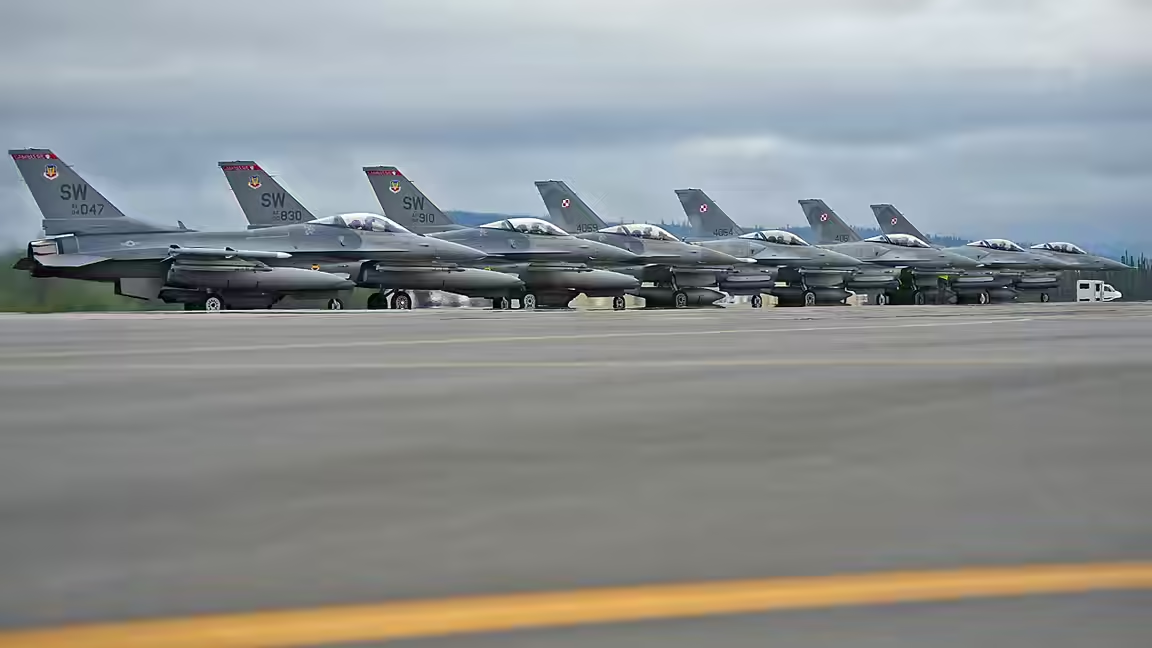
Polish forces responded by launching fighter aircraft while ground-based units and equipment remained ready. The command said its air-defence crews maintain continuous surveillance of the country’s airspace. No injuries or damage were reported in the supplied account, and it did not describe any weapons release or direct engagement.
The military interpreted the short incursion as another Russian attempt to test Poland’s air-defence readiness. That assessment is Poland’s characterization of the incident; the supplied report does not include a response from the Russian government or an independent account of the helicopter’s purpose. The precise measurements and duration also originate from the Polish military statement cited by the report.
Braniewo lies close to the border with Kaliningrad, the Russian exclave on the Baltic Sea between Poland and Lithuania. The location makes airspace monitoring there especially consequential for Poland, a NATO member bordering both Russian territory and Ukraine’s ally network in eastern Europe. Even a shallow, short-lived crossing can prompt a military response because authorities must determine quickly whether an aircraft is off course, gathering information or presenting a more immediate threat.
The incident occurred against the wider background of Russia’s continuing war in Ukraine and repeated concern among European governments about aerial activity near NATO territory. The report noted previous suspected airspace incidents involving drones elsewhere on the alliance’s eastern flank. Those earlier events do not establish the intent behind the Braniewo crossing, but they help explain the alert posture described by Polish authorities.
Poland’s account provides a clear sequence: radar detection, a fighter scramble and ground forces placed on standby, followed by the helicopter’s exit. Important questions remain unanswered in the available evidence, including whether Polish or Russian officials communicated directly after the event and whether Warsaw will pursue a diplomatic or alliance-level response. Until further official or independently verified information emerges, the Polish command’s measurements and assessment remain the principal public account of what happened.